

The way businesses find, assess and secure commercial premises has changed significantly over the past decade.
Property searches are now carried out online, Heads of Terms are circulated by email, identity checks can be completed digitally, and documents can be signed electronically. Yet one important part of the transaction has often remained comparatively traditional: creating, reviewing and completing the commercial lease itself.
For many landlords and businesses, progressing from agreed commercial terms to a final lease can still involve lengthy email chains, repeated requests for information and uncertainty over cost and timescales.
Much of that friction does not necessarily come from the complexity of the law itself, but from the way information is gathered and the transaction is managed. Technology is now beginning to change that, creating a more structured route through the process while retaining solicitor involvement where legal judgement is required.
A commercial lease is, of course, far more than a document recording rent and lease length. It can determine important responsibilities between landlord and tenant for many years, covering matters such as repair, insurance, service charges, permitted use, alterations, assignment and subletting, rent review, break clauses and security of tenure. Even relatively straightforward premises can raise important questions that need to be resolved before the lease is completed.
For example, the parties may need to establish precisely what the tenant is required to repair, whether alterations are permitted, how the property can be used, whether there is a service charge and whether the lease will remain within the protection of the Landlord and Tenant Act 1954. These are not simply drafting preferences.
They can have meaningful commercial consequences for both landlord and tenant, which is why relying on a generic downloadable template can create problems later.
Where digital systems can make a real difference is in the way this information is collected and organised. Traditionally, a solicitor may receive a short instruction to prepare a lease and then spend considerable time gathering the details required to draft it. Information arrives gradually from the landlord, tenant and property agent, and questions may need to be revisited several times before the documentation can progress.
A guided online process can turn that model around. The key commercial information can be collected in a structured way at the outset via a client portal, including the property details, rent, lease term, permitted use, deposit, repairing obligations, break provisions and other relevant terms. Depending on the answers provided, further questions can then be presented where necessary. The law has not been automated away; the administrative process has simply been made more efficient.
The same principle applies to lease review. Not every client is starting with a blank page. A landlord or tenant may already have received a draft lease from the other side and simply need to understand what it means, identify areas of concern and establish whether the document reflects the Heads of Terms and intended commercial deal. Digital workflows can help organise this process too, giving the reviewing solicitor the relevant information in a structured form and making it easier to focus professional time on the provisions that actually require legal judgement.
This is an important distinction in the wider discussion around artificial intelligence and legal services. The strongest use of technology is not necessarily to replace lawyers, but to reduce the time they spend on repetitive administration. Automation is particularly well suited to collecting information, checking whether required details have been supplied, applying predefined rules and creating a structured first draft.
Solicitors remain important where interpretation, judgement, negotiation or legal advice is required.
That hybrid model also makes it easier to identify when a straightforward lease transaction requires additional supporting work. A commercial lease may be accompanied by a rent deposit deed, a plan, a licence or other property documentation. In other cases, the parties may need help negotiating specific lease terms, reviewing an existing lease or dealing with questions around security of tenure.
Rather than treating every matter as the same type of transaction, a structured digital service can separate the core lease work from the additional legal services genuinely required.
There is also a significant benefit in greater transparency over cost. Smaller landlords and SMEs can sometimes find traditional commercial property legal work difficult to budget for, particularly when charges are open-ended or based primarily on time. A more structured service makes it possible to provide a clear fixed fee for standard lease creation or review, while identifying additional work separately where the transaction becomes more complex.
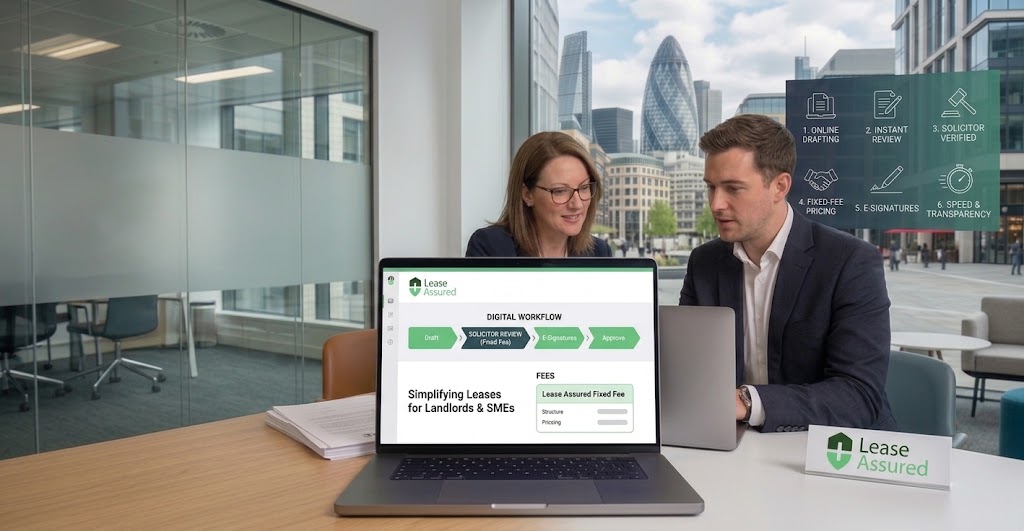
This is the approach being taken by LeaseAssured, which combines an online commercial lease process with solicitor review. Alongside creating a commercial lease online, the service also supports clients who need an existing lease reviewed and can provide access to supporting commercial property services where additional documentation or legal input is required. The aim is not to remove the solicitor from the transaction, but to make better use of professional time by digitising the parts of the process that can be handled more efficiently.
There will always be commercial property transactions that require detailed negotiation, bespoke drafting and substantial legal involvement. Complex multi-let buildings, unusual repairing structures, significant development obligations or heavily negotiated institutional leases are not obvious candidates for a highly standardised process.
But many more straightforward commercial leases sit somewhere between these complex transactions and the other extreme of downloading a template and attempting to manage the legal position without professional support.
That middle ground is where digital legal services are likely to have the greatest impact. Landlords and businesses increasingly expect the same level of clarity, convenience and transparency from legal services that they already receive from banking, accounting and other professional platforms.
Commercial lease creation and review are beginning to move in that direction.
The change is therefore not simply about putting legal documents online. It is about separating the elements of a transaction that require genuine professional judgement from the administration that technology can manage more effectively. For landlords and businesses, that has the potential to make commercial lease transactions faster, clearer and more accessible, while preserving the solicitor oversight that gives the documentation its legal and commercial value.
About the author
 Dan Yeo is founder of LeaseAssured, a digital commercial property legal service for landlords and businesses in England and Wales. LeaseAssured provides fixed-fee commercial lease creation and review, combining a guided online process with qualified solicitor review, alongside supporting services including rent deposit deeds, licences and other commercial property documentation.