

Brand consistency in animation is harder than brand consistency in static design. A logo lockup either matches the brand guide or it doesn’t.
An animated character, over twelve scenes produced across six weeks by three different workflow runs, can drift in proportion, skin tone rendering, motion rhythm, and color temperature, none of them catastrophic in isolation, all of them noticeable in sequence. This drift problem is what Pollo AI’s cross-scene consistency tools are specifically designed to prevent.
Why Consistency Is a Production Infrastructure Problem?
The instinct is to treat brand consistency as a style decision, make the right choices at the brief stage, and consistency follows. That’s partially true for single-piece content.
For a content library, an onboarding sequence, a product explainer series, a social content bank, consistency is actually an infrastructure problem.
When content is produced in batches across different sessions, small differences accumulate. Character proportions shift by a degree that’s invisible in isolation but obvious when seen side by side.
Color temperature warms by a point that only shows up when videos play consecutively. Motion pacing accelerates imperceptibly across successive generations.
The brands that maintain visual coherence across large animation libraries aren’t just more disciplined about their style brief — they’re using tools that enforce consistency at the generation level.
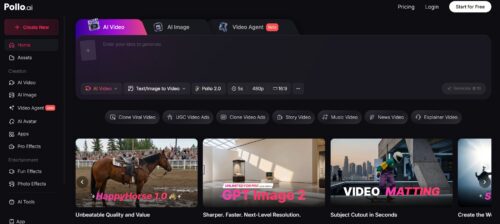
That’s what the Pollo AI animation generator‘s cross-scene consistency tools provide: consistency that’s built into how the content is produced, not applied after the fact.
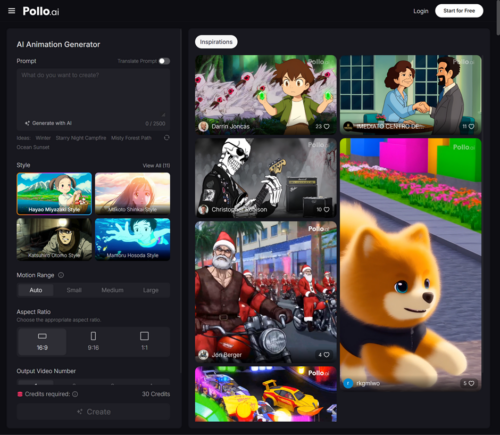
The Four Places Where Style Drift Usually Enters
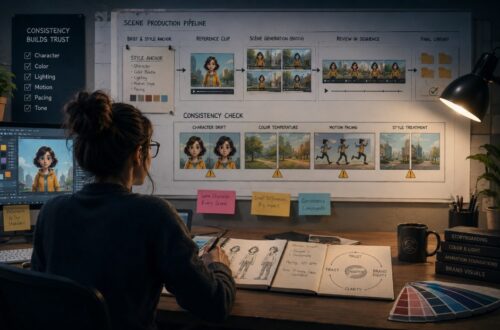
Character drift: the most visible failure. The same character looks subtly different from one video to the next — different face proportions, different hair rendering, slightly different body scale relative to the frame. Viewers register this as “something feels off about this brand” without being able to name why.
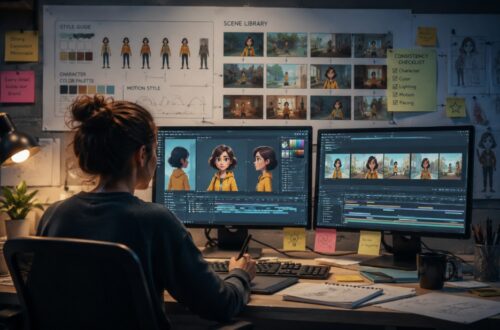
Style treatment inconsistency: one video in the library uses clean flat design; another has a slightly more illustrative quality. Both might be excellent individual outputs. Together, they look like they came from different brands.
Motion vocabulary mismatch: one video uses quick, snappy transitions; another uses slower, more cinematic movement. The pacing difference creates a perceived brand personality inconsistency — the brand feels energetic in some contexts and subdued in others, which reads as incoherent.
Color temperature variation: even when exact hex values are maintained, differences in rendering warmth across videos make the brand palette feel inconsistent. This is subtle but cumulative — it compounds across a large library.
How Pollo AI Addresses These Failure Points?
Pollo AI’s animation generation platform includes character consistency support specifically designed for brand content producers.
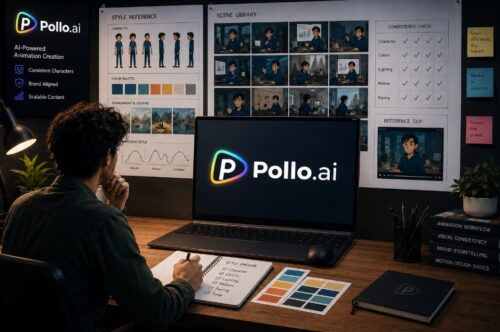
When a character identity or visual style is established in one piece of content, Pollo AI’s tools can maintain that identity across subsequent generations, reducing the drift that would otherwise accumulate across a content series.
Beyond character consistency, Pollo AI’s editing tools allow teams to make style corrections without rebuilding content from scratch.
If a specific scene in a completed series has drifted from the reference standard, targeted corrections can be applied without re-generating the entire piece.
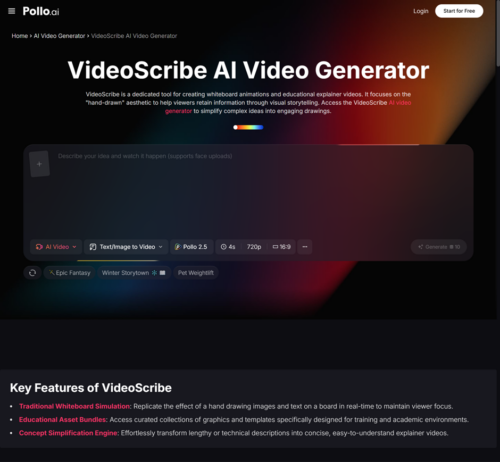
For teams interested in exploring how whiteboard and sketch-style animation approaches can complement and extend a broader animated content strategy, particularly for explainer and educational content formats, the Videoscribe page on Pollo AI provides useful internal context on how different animation styles serve different communication goals.
A Repeatable Consistency System for Multi-Scene Production
The operational structure that prevents drift:
Step 1: Create a style anchor before the first generation. Document character descriptions in specific visual terms, color palette with warmth preferences noted, motion style as an adjective set (e.g., “smooth and deliberate” or “fast and energetic”), and pacing as a target beats-per-minute. One page maximum.
Step 2: Generate a reference clip and validate it. Before producing any series content, generate a short reference clip against your style anchor. This becomes the visual standard everything else is measured against.
Step 3: Batch by proximity. Generate scenes that belong to the same content series within the same session where possible. The further apart in time two related pieces are generated, the more opportunity for drift.
Step 4: Review in sequence, not individually. Final consistency review should be done by watching all pieces in series order. Drift that’s invisible when watching a single video becomes obvious when watching five in sequence.
Step 5: Correct against the reference, not the brief. If a piece needs correction, compare it to the reference clip — not to the written brief. Visual reference is more reliable than written description for catching subtle inconsistencies.
Conclusion
Visual consistency is compounding brand equity. Every animation that aligns with the library standard reinforces the brand’s visual identity. Every piece that drifts erodes it a little.
Pollo AI gives content teams the generation infrastructure to produce animated content libraries that stay coherent at scale, not through more careful oversight, but through tools built to hold consistency across sessions, scenes, and time.
Author Profile

- Blogger by Passion | Contributor to many Tech Blogs in the United Kingdom | Fascinated to Write Blogs in Business & Startup Niches |
Latest entries
 Tech Updates7th May 2026Pollo AI Animation Generator for Brand Style Consistency Across Scenes
 Tech Updates18th September 2025Advancing Audio-Visual Systems for Modern Work, Learning, and Public Spaces
 Gaming29th May 2025Are Gaming Laptops Better Than Gaming PCs? A Comprehensive Comparison
 Tech Updates8th May 2025Are Smart Locks the Future?